The Many Chapters of Small Living

Conversations about small living quarters have “made it big” in the headlines the last few months. It’s been both exciting and overwhelming – exciting that new people are exposed to this idea and overwhelming to try to keep up with everything that’s going on!

My interest lies in the many “chapters” of small living. As my posts begin to get more specific to each of these chapters, I thought it’d be helpful to precede with an overview:

Accessory Dwelling Units

An Accessory Dwelling Unit, or ADU, is an independent, secondary residence to a single-family house – either attached or detached. There are many names for ADUs: granny flats, backyard apartments, in-law suites, carriage houses, backyard cottages, garage apartments, etc. Pictured above is one of my favorite ADUs in Raleigh. As an Architecture school project, I designed a backyard apartment, which exposed me to the alley networks of Raleigh’s historic neighborhoods and their many converted carriage structures. This is when my interest in small spaces began.

ADUs provide flexibility in living arrangements and a source of income for the owner, an affordable housing option near the city center for the renter, and more diversity and density for the neighborhood and greater community. In Raleigh, construction of new ADUs is prohibited, but this subject is currently under review in the new Unified Development Ordinance. Plenty more on this subject in posts to come.

Laneway Houses
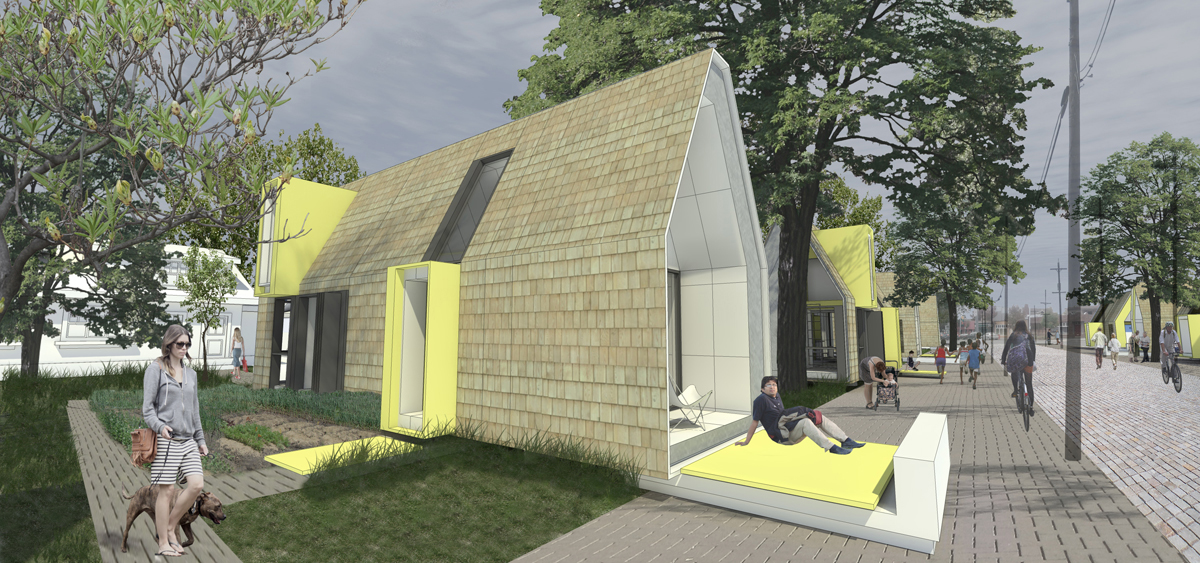
Similar to ADU’s, Laneway Houses, or Alley Dwellings, are small residences in the back yards of single-family houses, but they are on their own lot. This usually involves an exhaustive zoning and permitting process of subdividing an existing lot, to create two independent lots, with the smaller lot usually accessible from an alley. A dwelling with its own address can then be constructed new, or existing infrastructure can be rehabilitated.

Pictured above is a proposal by in situ studio (where I work) and David Hill AIA for the HOME Competition. Our design of small, affordable dwellings builds on the idea of Laneway Houses. We leveraged the current zoning changes in Raleigh which will reduce the minimum size of a lot, and created a new zoning district, RA-50, made of the trimmed off excess land at the back of the lots. This would create an alleyway neighborhood in the centers of residential blocks. Learn more here.

Toronto is one of the leading cities of Laneway Houses, focusing on developing their inner residential blocks.  The Laneway House designed by Toronto architecture firm Shim-Sutcliffe is truly inspiring. I am equally intrigued by the alley structures that became homes at out necessity and accessibility, like Browns Court in Washington DC.

Tiny Houses

There is a growing number of people that have completely embraced small living, to an extremely small scale. Most commonly these are literally “tiny houses,” with gable roof and porch, scaled down in size to fit on a trailer for easy transportation. Pictured above is La Casita, the cherished home of Andrea and Cedric of Charleston Tiny House. Thanks to Andrea for the pictures. Keep an eye out for a post about La Casita coming soon.

Jay Shafer of Tumbleweed Tiny House Company has led the Tiny House movement by selling plans and organizing workshops that empower people to build their own Tiny House while joining a community of supporters.

Micro-units

Some US cities like San Francisco, New York City, and Chicago, are revisiting the minimum size for apartments as a way of increasing housing options for singles and couples. The proposal of micro-unit apartment buildings in San Francisco as small as 220 sqft has stirred up both support and protest. Pictured above is a rendering of SmartSpace, championed by Patrick Kennedy. NYC’s Mayor Bloomberg launched adAPT NYC, a call for designs of micro-unit apartment buildings.

The Not So Big House
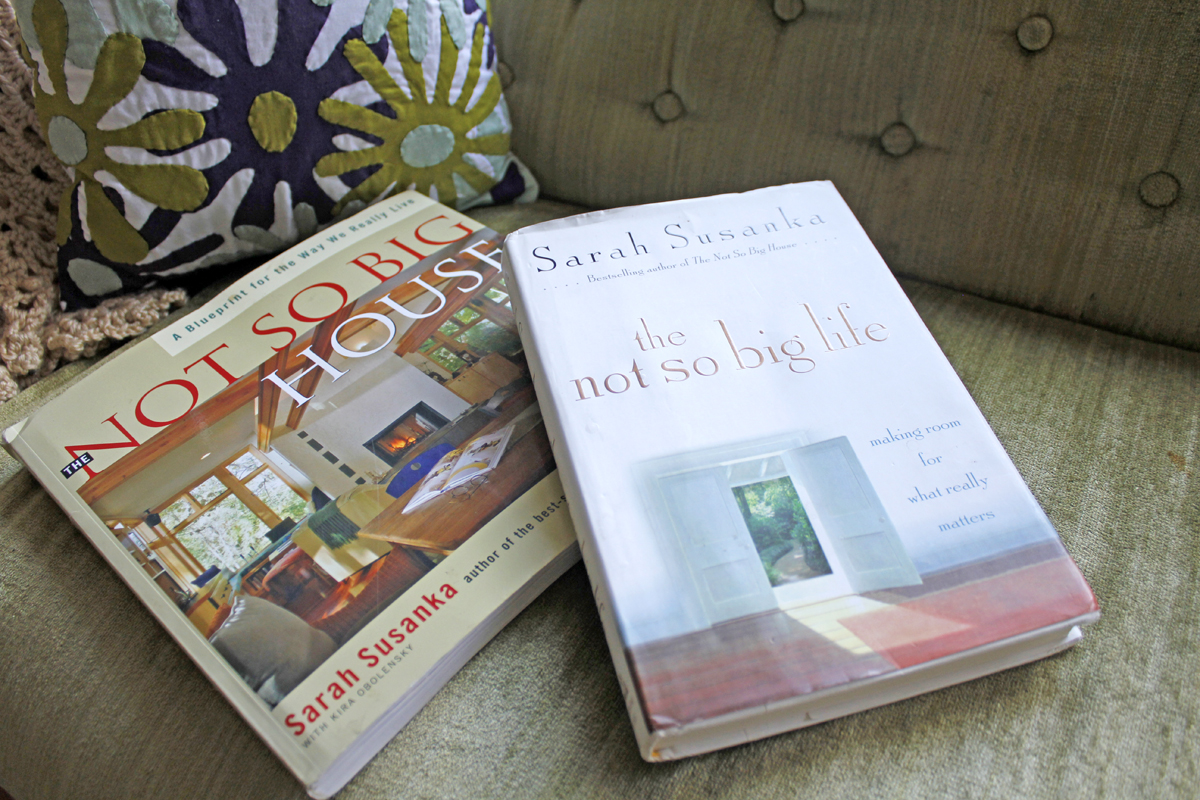
Sarah Susanka, architect and author, has been writing since 1998 about the “Not So Big House” – a residence that favors quality over quantity by reducing square footage. She was at the forefront of this modern perspective of small living, which has spawned a movement where Americans are reconsidering the size of their homes. I have come across Sarah’s collection of books more recently, and am really enjoying reading them while relating to my own experience of living in a small apartment. I’m currently reading The Not So Big House: A Blueprint for the Way We Live and The Not So Big Life: Making Room for What Really Matters, pictured above on my not-so-big sofa with a not-so-big pillow.

Simple Living

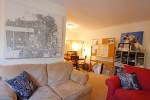
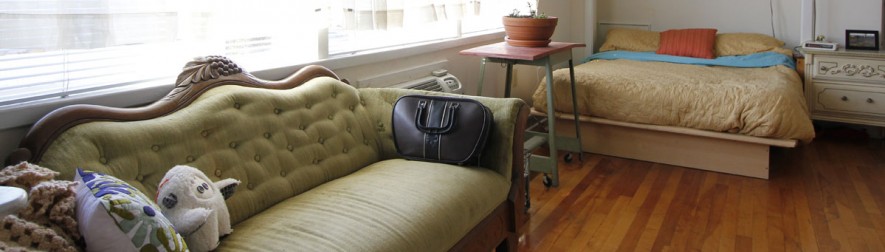
An edited lifestyle comes hand-in-hand with living in a small space. When you don’t have much space to store unused items, you begin to cut down on physical (and mental) clutter, and become more conscious of what you actually need to live. I realized a greater appreciation for a simpler life grew naturally out of living in my small space (pictured above). This is what interests me most about architecture – how a space can inspire your life.

Simple Living: The Oil Cleansing Method

Another theme I am exploring with this blog is “simple living” to make room in life for what’s important. It’s amazing how a space can influence the way you live. My small studio apartment has made me more aware of what I add into my life, what I keep, and what I throw away – and I love it! I focus more on eating healthy, reducing my waste, and minimizing the stuff I collect. This has helped me appreciate what I have and how I spend my time. I like to think of it as “living intentionally.”

In this theme of simple living, I am introducing The Oil Cleansing Method. If you look at the ingredients in a bottle of face soap, you might expect that half of them are difficult to pronounce and long enough to fill a Scrabble board for an immediate win. Seven months ago I started using the oil cleansing method, and I’m still impressed. Here’s how it goes:

1. Mix

The ingredients are simple: castor oil and olive oil (yes, real olive oil!). Mix them together equal parts. For oily skin use more castor oil, and for dry skin use more olive oil. I tweak the balance of oils depending on the seasons – hot/humid months vs. cold/dry months. What’s great is I don’t have to use a moisturizer. I keep the oil mixture in a small plastic pump (that I got at the dollar store), easy for daily use and travel.

2. Rub

With your face dry, rub the mixture into your skin. I use two pumps, so about a quarter-sized amount. It’s like a mini face massage. This is also an effective makeup remover.

3. Steam

Soak a small face towel in hot water and squeeze out the excess liquid. Place it over your face, and hold in place until the towel returns to room temperature. I love this part!

4. Wipe

To finish your face-cleansing regime, just wipe away the oil from your face with the towel. If needed, you can rinse the towel and wipe again.

5. Enjoy

You’re done! No need to dry. Seriously, I always feel like my skin is rejuvenated and has a natural glow.

Recap on why I love this: simple common ingredients, healthy and cheap, acts as moisturizer and makeup removal, easily modified per skin type, and it feels so good!

It’s not only for ladies! I’ve been trying to convince my boyfriend to give it a try. One day I will succeed…

You can learn more about the benefits and fine tune your method through this blogpost by Simple Mom. This is the guide I followed when I was first introduced to the Oil Cleansing Method. Thanks to our wonderful client, inspiring author, green-living guru, and hilariously honest bloggerAmy Worley, for introducing me to this!

Enjoy!

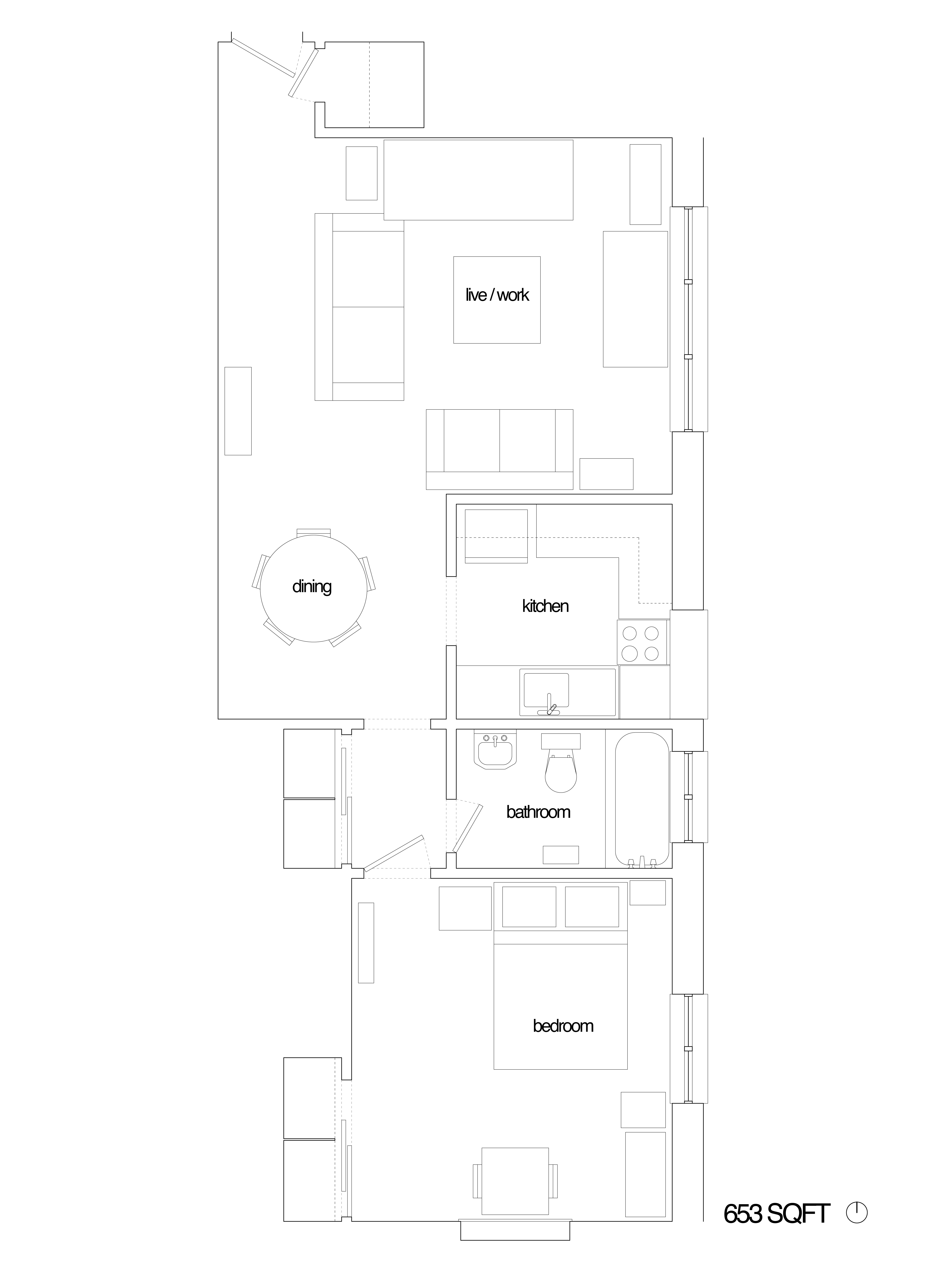
Matt’s 653 sqft Live Work Apt

Describe your place:

My apartment is in a mid-century office building above an eyewear center and a dentist. It’s one of four apartments tucked away in the corner of the larger commercial building. We have entrances along Saint Mary’s Street and in the back parking lot. The building is across from Broughton H.S. and next to Fred Fletcher Park. Cameron Village and Glenwood south are both a 10 minute walk away. Lastly, it’s only one block away from my girlfriend’s apt (interesting tip: it’s Nicole – the author of this blog).

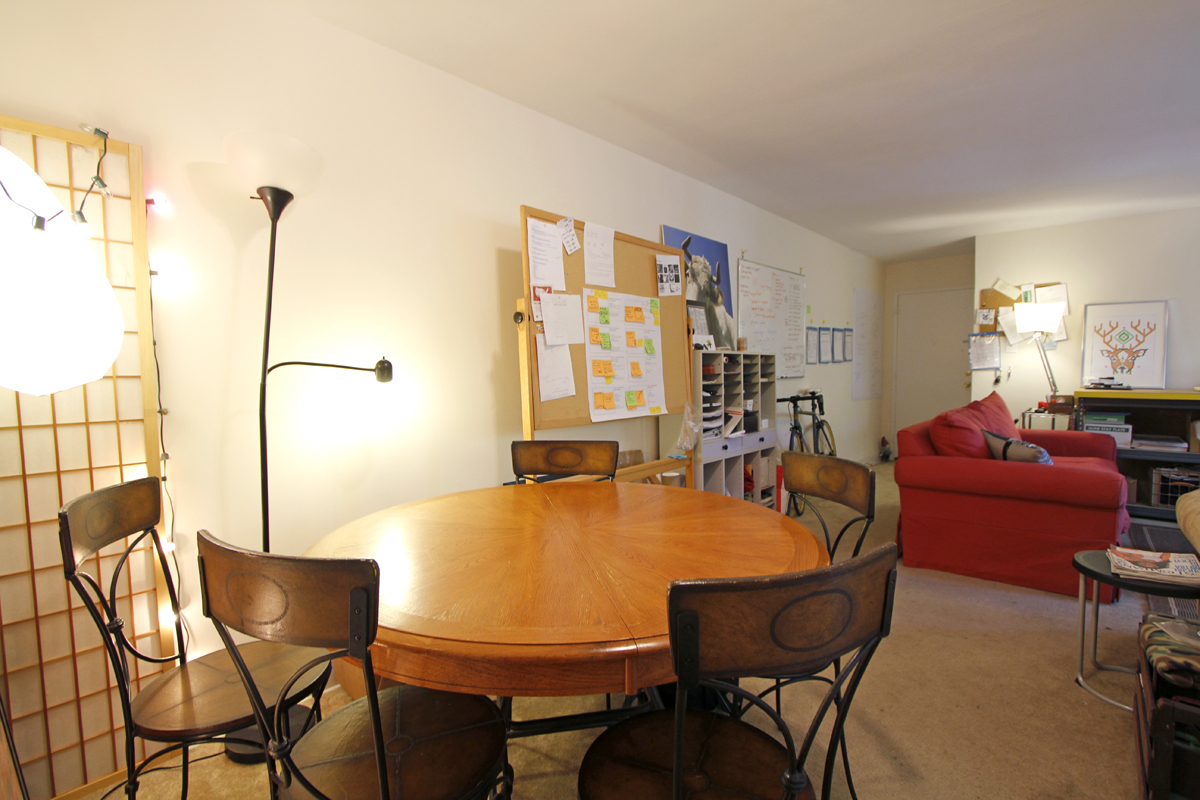
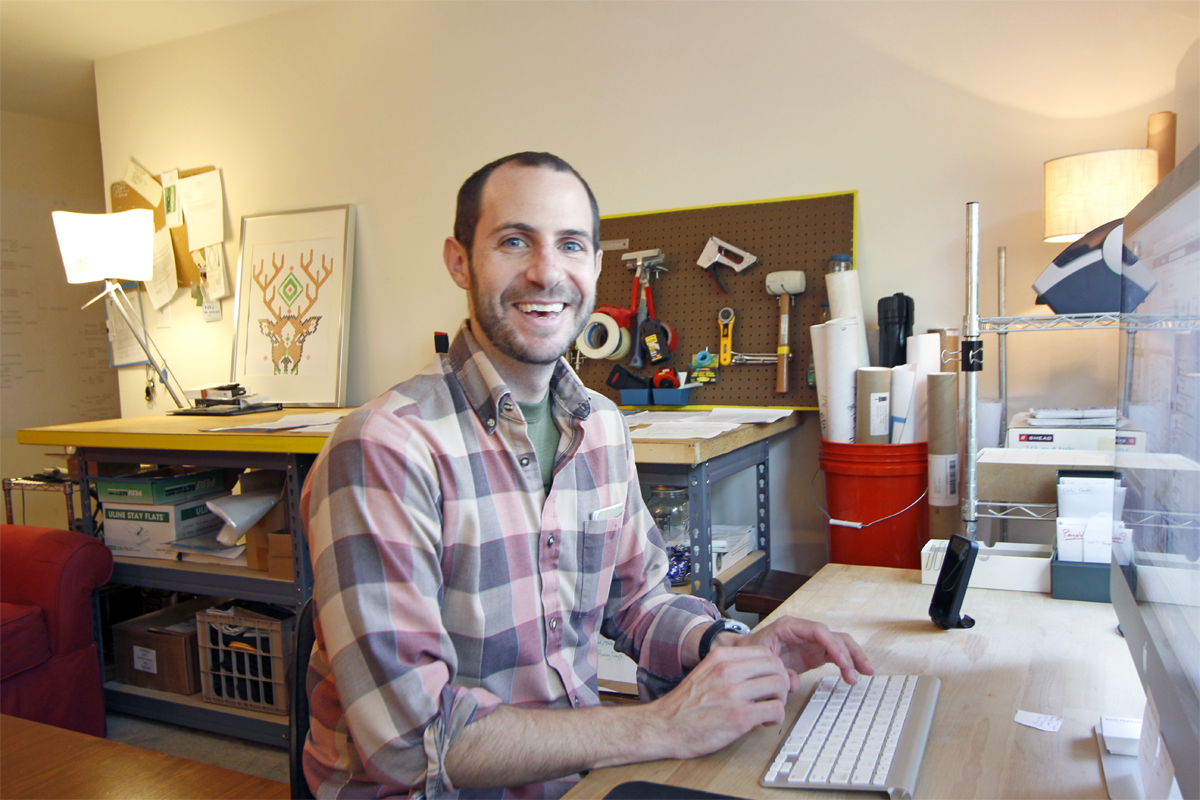
As far as my apartment goes, it opens up to a main foyer, which often times I store business stuff in, hence live/work. The CityFabric studio is located in my living room.  I have a physical and a digital work desk perpendicular to each other, situated next to the windows for maximum daylight.

What do you love about your space?:

I love being able to work, host and live in my space. The apartment feels bigger than the square footage because the space is divided into so many different areas. My bedroom is in the back and easy to close off which makes office visits feel more professional. The space is versatile – place to meet and greet and host without it feeling like my apt. I have three large closets that really help organize all my business stuff. The built-ins help with storage and de-cluttering.

How would you improve your space?:

Bigger Windows: Even though the apartment is a couple flights up, there is not too much natural light due to smaller windows and a large, old-growth tree. Better Ventilation: The ventilation is not so great either since all the windows are along the same wall.

No carpet! I would have hardwood floors for cleanliness reasons and light.  Open up the kitchen: would help make socializing while cooking much easier.

What do you like best about small living?:

Location location location!  Having the choice and the ability to walk or bike around town, grabbing food, meeting up with friends, having a drink, or just wander through the adjacent park is much more important to me at this point in life than doing yard work.  Living closer to a lot of different people allows for the casual encounter or spontaneous interaction throughout my neighborhood and park.  They are unplanned and wonderful.

Lastly, living in a smaller place forces you to be selective with what you own and it keeps life simple.

Tips for fellow and potential small-space dwellers:

A lot of natural daylight and big windows really helps make a space feel welcoming.

It helps to play around a lot with furniture. My living room ended up being much cozier after simply shifting the coach 3 feet after living there for a full 5 months.

More about me:

I run CityFabric, a small business focused on stitching together people and places through civic and social innovation and design. We have a full line of civic-minded products, and have recently launched a few projects focused on walkability called WalkRaleigh and Walk [YourCity]. Currently, this apartment is CityFabric Headquarters, with satellite offices scattered throughout downtown coffee shops, most commonly Helios, within walking distance.

Cork Accessory Organizer

In addition to studying small spaces near and far, I am taking on a variety of projects here in my own studio apartment to help organize, decorate, and better live in a small space. Consider my studio a testing ground.

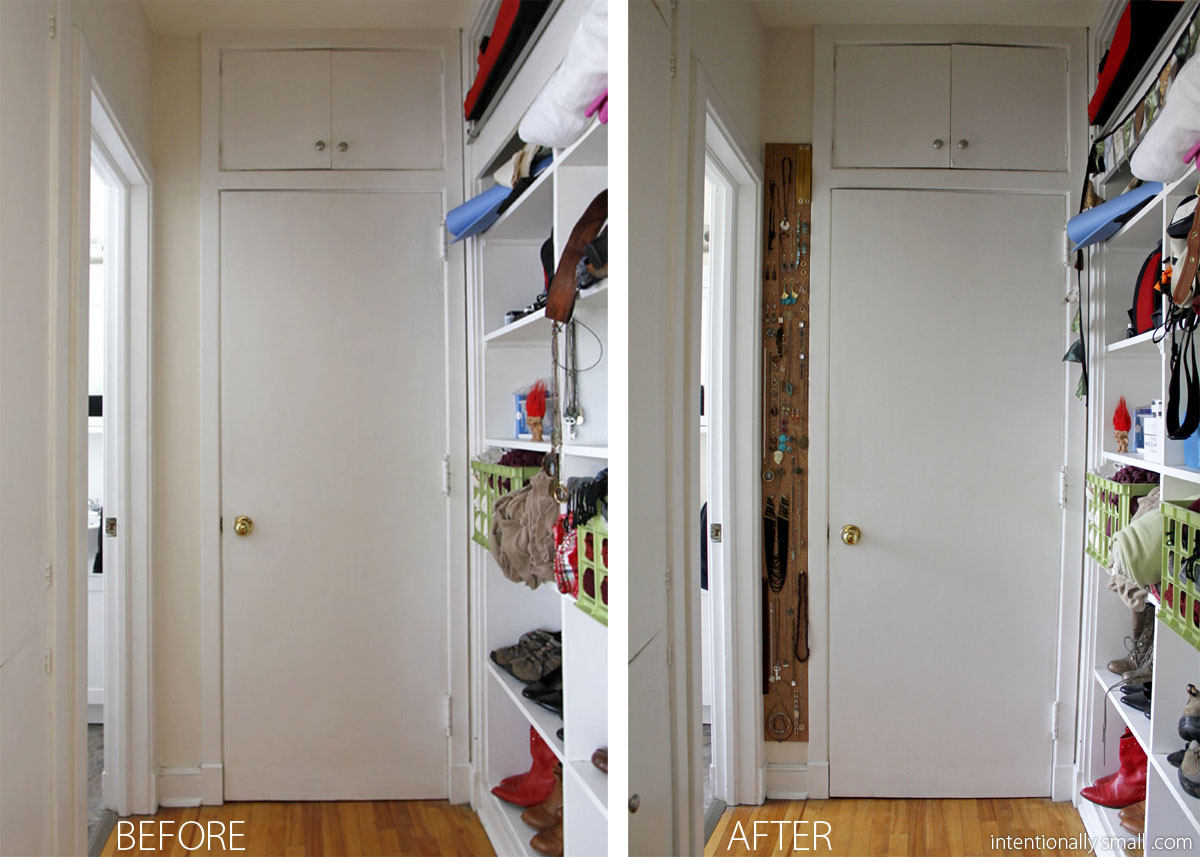
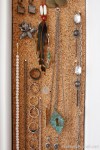
First assignment: organize my necklaces! They were always in a tangled mess, so on my way to work in the morning, I’d have to forfeit a fight of pulling one from the bunch. The solution: a cork strip where I could hang each necklace separately.

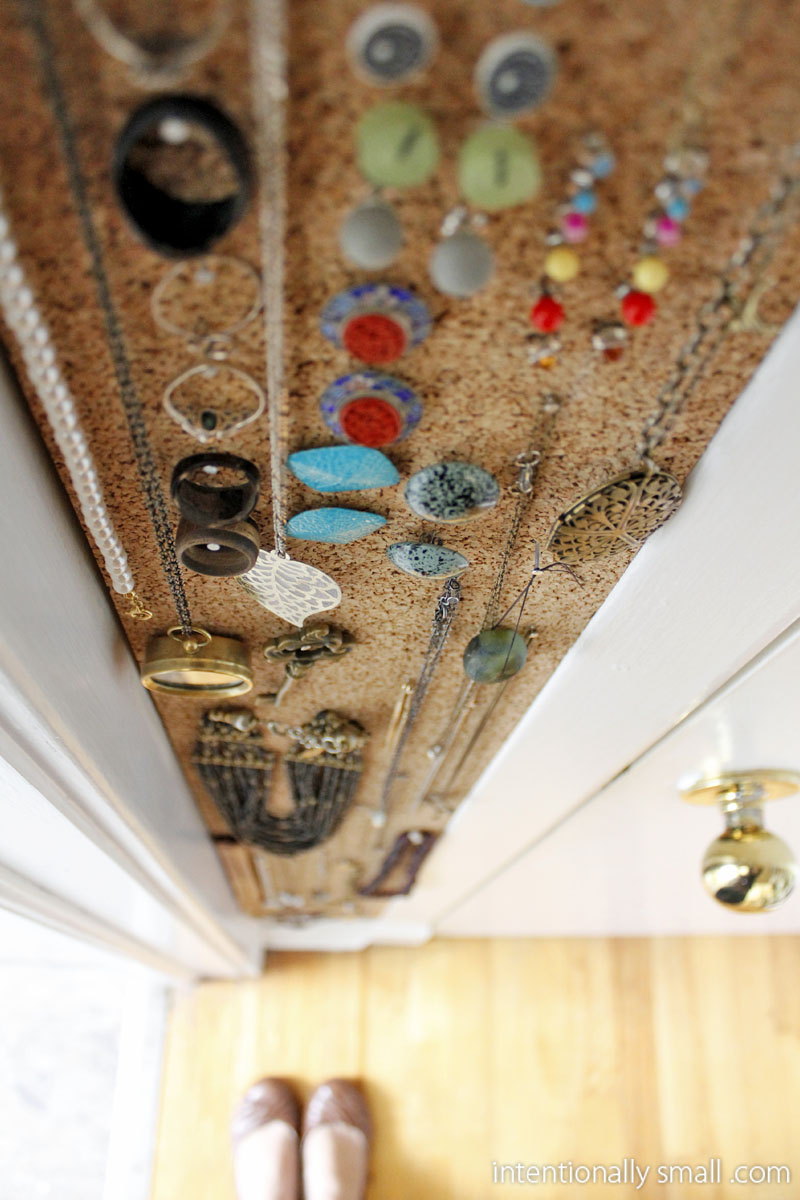
It works great! Not only are my necklaces kept free of tangles, but now I can easily see all my options and make a proper selection. I had more than I remembered, so it also became an editing project, setting some aside to give away.

It gets even better. I wasn’t expecting to be able to organize all my accessories: necklaces, bracelets, watches, earrings (hanging and studs), and rings! Hanging the earrings was my favorite – studs were like pushpins and hanging earrings hover over the surface.

This was a fun project that really made a difference! All you need is 1/4″ cork glued to a backing (I used chipboard), and a bunch of little wire nails. You can get creative with where you install the cork organizer. I fit mine between the trim of my closet and bathroom doors – perfectly next to my clothes and mirror for easy decision-making. Another great thing about this project is you won’t have to patch a bunch of holes in your wall – #rentalapartment!

If you make your own, please share pictures and enjoy!

Our 379 sqft Studio in Venice

  • size: 379 sqft
  • type: studio apartment
  • location: Venice, Italy
  • apartment rental website: Venise je t’aime

I just returned from an amazing trip to Venice with my boyfriend Matt of CityFabric. We were representing WalkRaleigh in the US Pavilion’s exhibit Spontaneous Interventions at the Venice Biennale. We stayed longer to explore, of course!

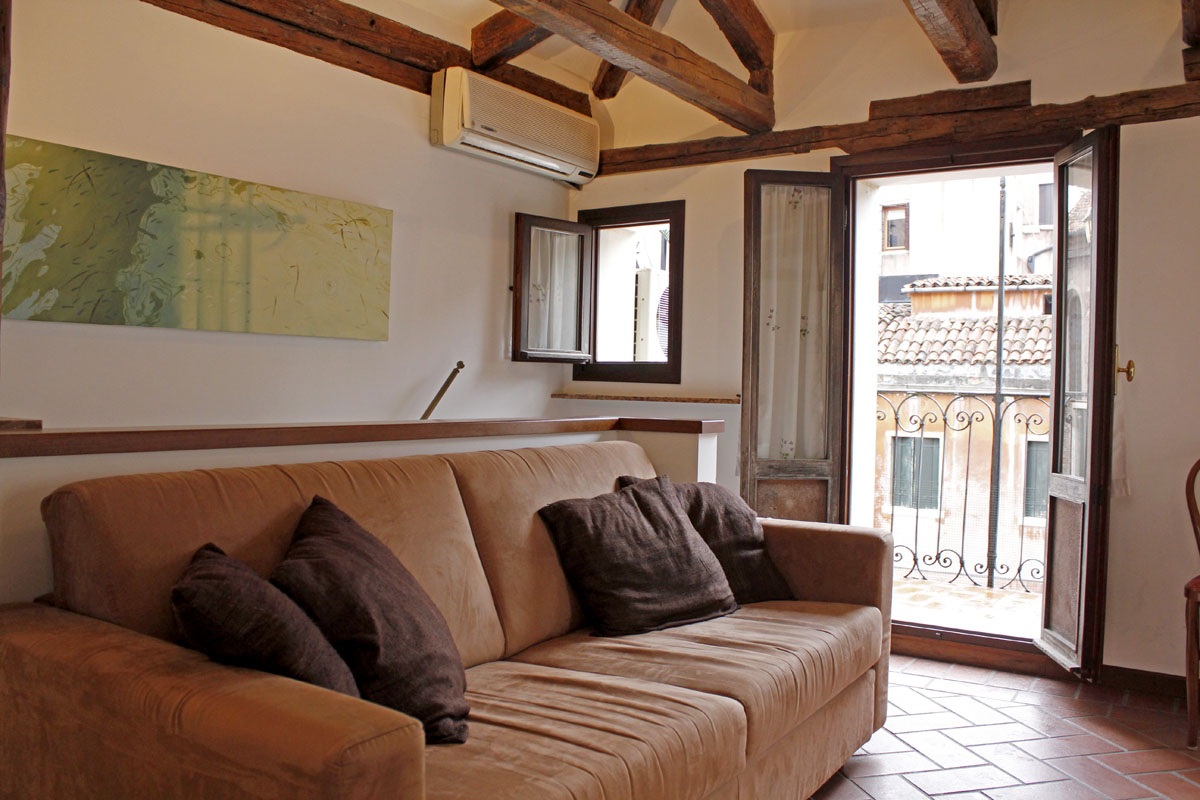
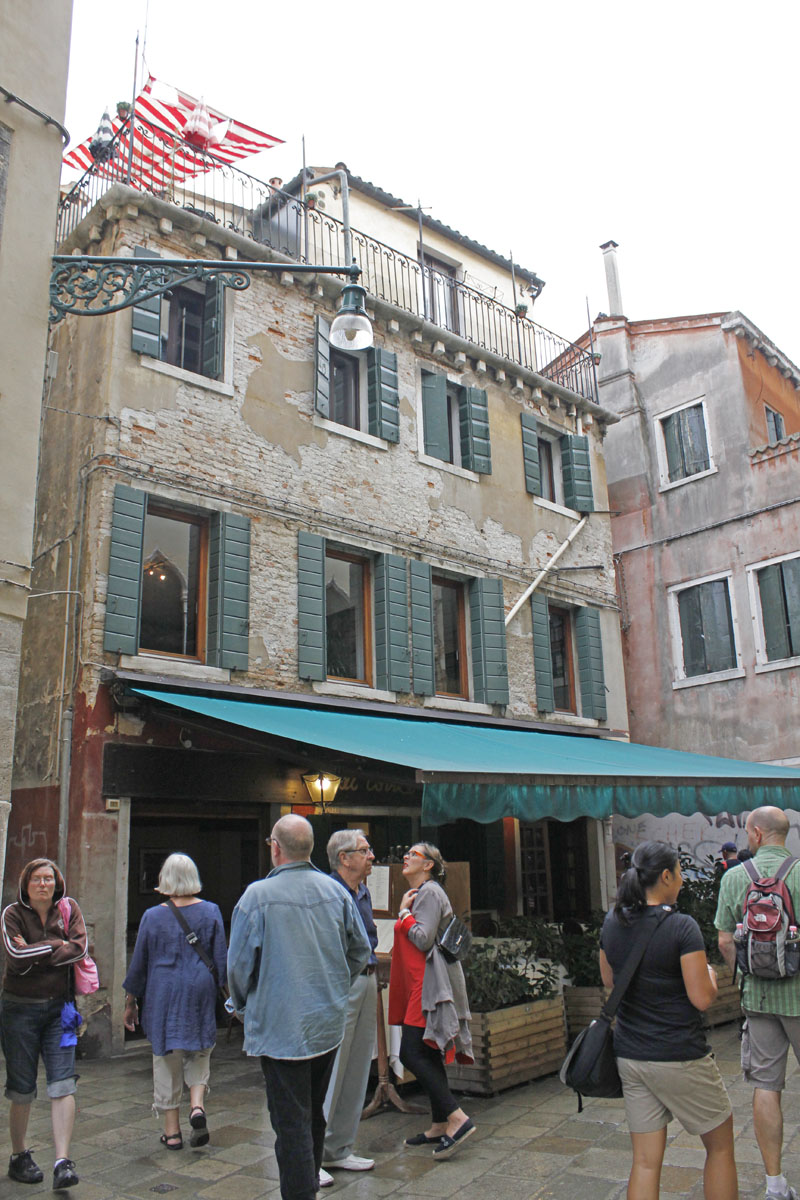
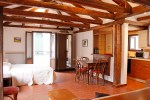
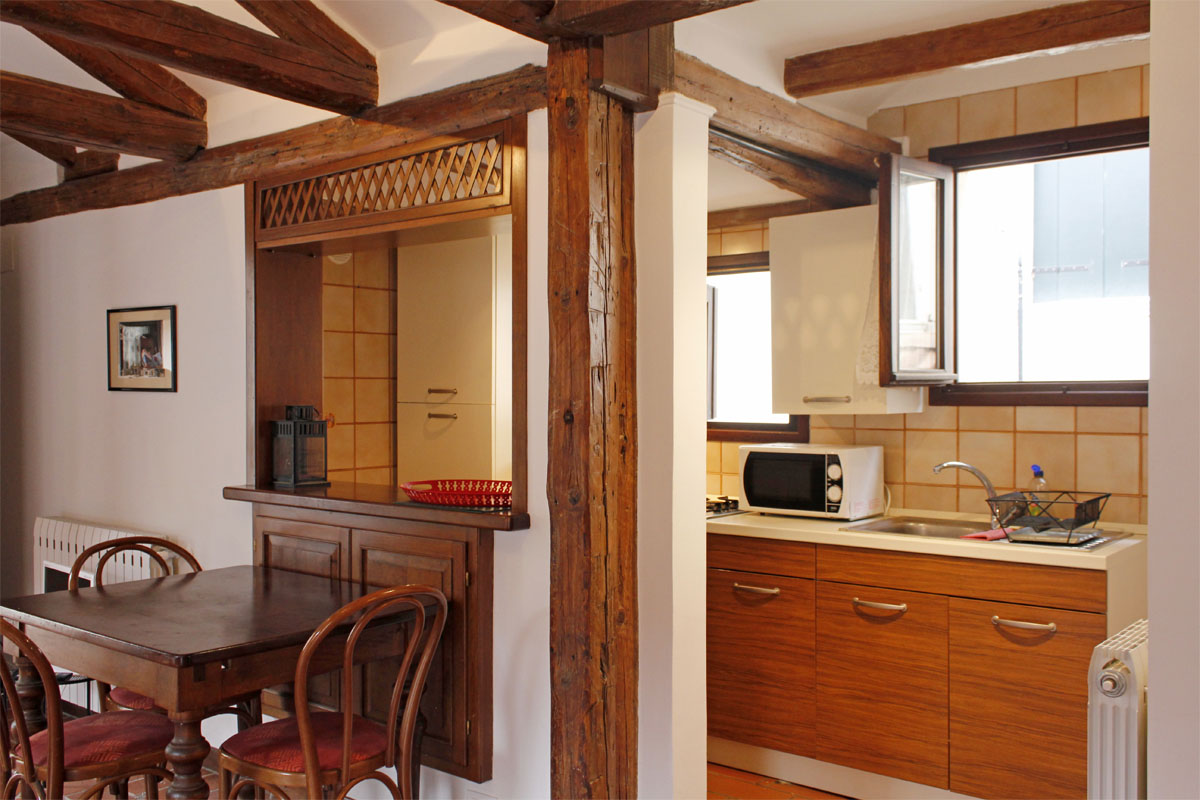
We found the perfect Venetian home away from home. The studio apartment was at the top floor of a four story building just minutes from San Marco Piazza. Its open floor plan, vaulted ceiling, exposed wood structure, and many operable windows made the space feel rather large for only 379 sqft.

I loved the layout of the kitchen – defined yet open to the entire space. Everything was justified to one wall. The windows, wide entry, and pass-through expanded the space to the inside and the exterior. The pass-through also added function providing an extra work/display surface and storage in the cabinet below, accessible from both sides of the wall. Another nice feature was the freezer/fridge disguised as millwork.

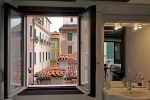
One of my favorite views out was actually from the bathroom. It showcased the rich layers of the city. We had a clear view of the Campanile de San Marco and our neighboring church San Zulian. The unison of bells at every hour was delightful. The bathroom may have been small, but they still made room for a bidet.

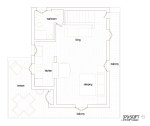
By far, the best part of our place was the wrap-around balcony and terrace. A third of the total square footage was exterior space! The two kitchen windows opened right onto the terrace, perfect for passing food out to our preferred dining spot. It was also fun to watch and hear people get lost in the alleys below…

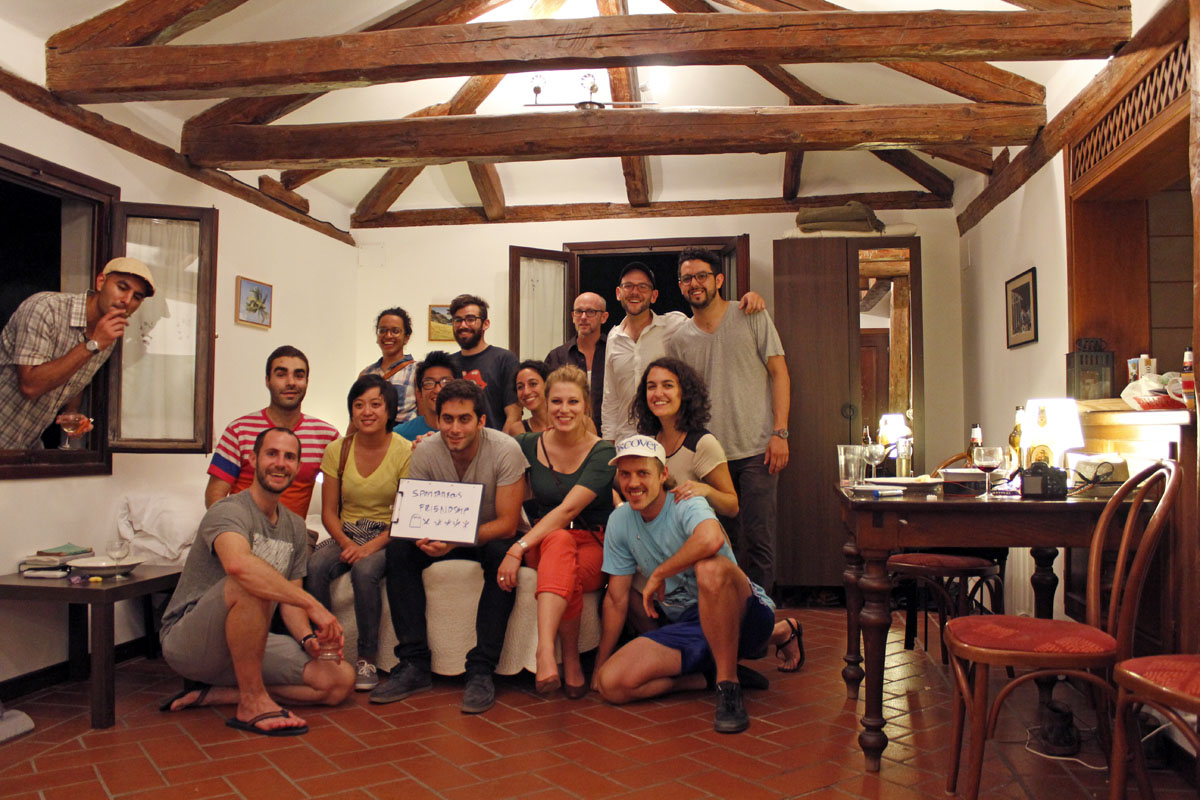
A common question for small-space dwellers is: “Can you entertain people?” – We sure did! A lack of cellphones and wifi led us to create a few signs leading our fellow American exhibitors from the nearby square to our apartment for a “spontaneous evening.”

Ciao Venice!

Hillary’s 703 sqft 1-Bedroom Apartment

  • size: 703 sqft
  • type: 1-bedroom apartment
  • location: Historic Oakwood, Raleigh, NC
  • inhabitants: Hillary Thomas and Darryl Jones
  • pet: Diego, our German Shepard mut puppy
  • my info: blog


Describe your place:

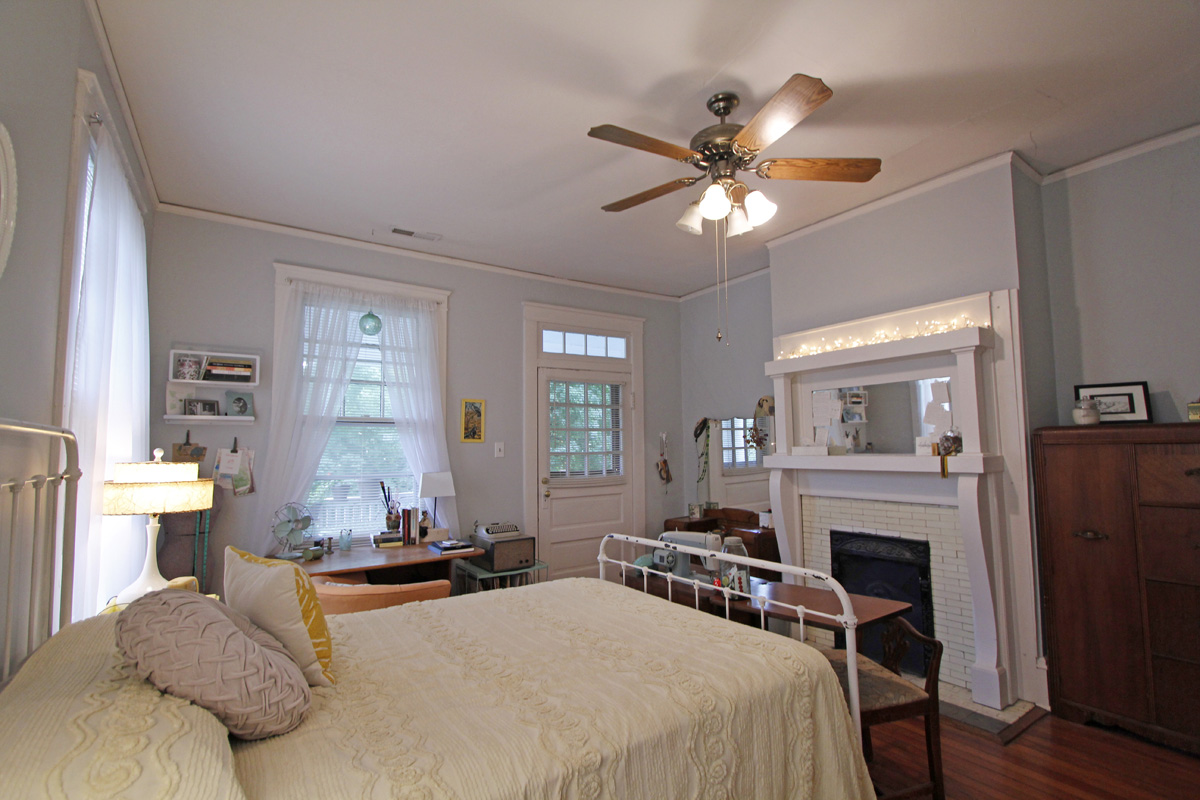
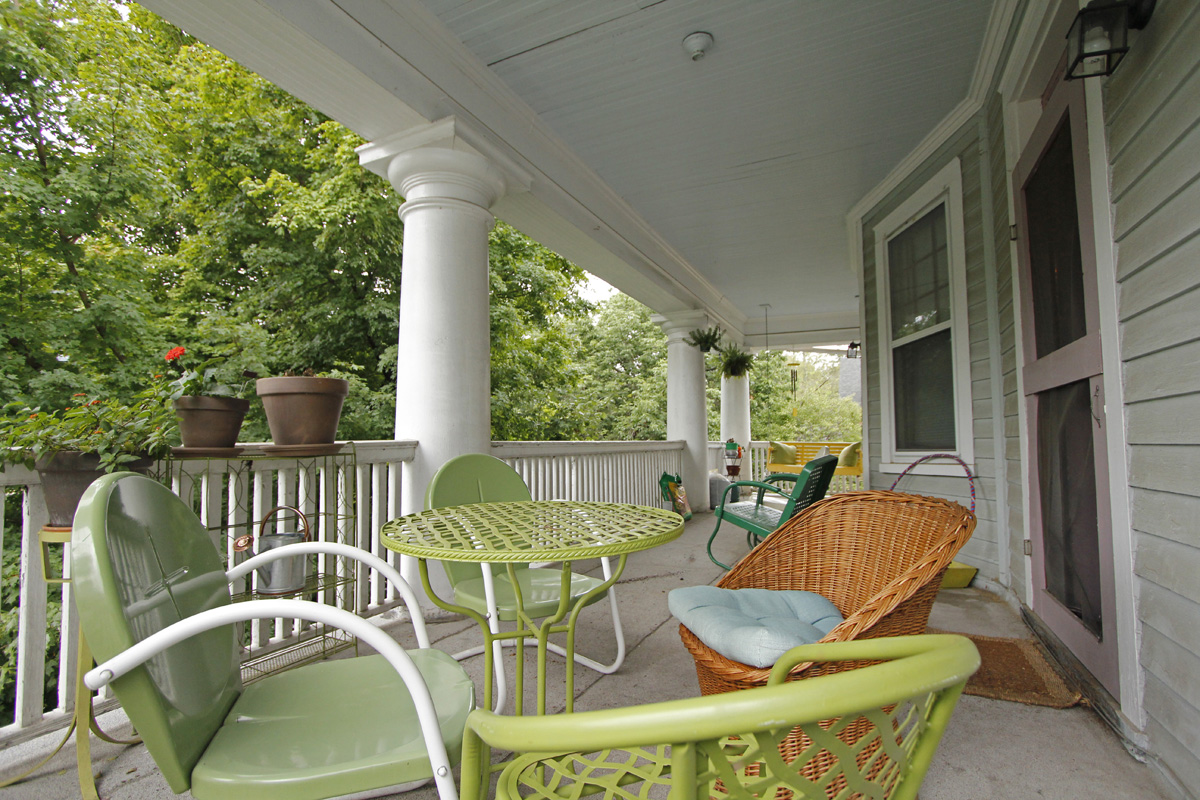
My boyfriend and I live on a lovely street in Historic Oakwood in downtown Raleigh. The apartment is located on the top floor of a turn-of-the-century house, so we get to take advantage of all the amenities historic architecture has to offer – high ceilings, wide woodwork, large windows, hardwood floors, fireplaces with grand mantles, and a claw-foot bathtub. We also get to enjoy a large front porch that I share with an amazing neighbor and a smaller private back porch with stairwell access to the backyard. We even have a portion of the yard, where we keep a veggie and herb garden.

Our space is a mix of art and flea market, estate sale and antique store finds. It’s pretty retro.

What do you love about your space?:

I love the historical nature of the apartment. I have always been more drawn to old living spaces, so I feel very at home here. I love the cracks, the creaks, the slightly crocked floors; every beautiful detail that shows the house’s age. These are constant reminders that my living space is unique and that it has history. I also really like the fact that, like so many houses in Oakwood, we get the privacy of our own apartment, with the closeness of a neighbor that we share a house with. (My next door neighbor and I have coined the term “semi-roomie.”)

I also love that we live so close to downtown. We are within walking and biking distance to restaurants, museums, food markets, bars, a yoga studio, an urban farm, a movie theater, our favorite cycling shop and many of our close friends who also live downtown.

How would you improve your space?:

I would love for this apartment to have a bit more storage space. We have only one closet, so we have had to explore other discrete options for storing our things. We have a mobile clothing rack that lives behind our bedroom door, our linens are housed in a couple kitchen cabinets, and we have some storage boxes under our bed. We also have a few colorfully painted vintage metal cabinet units around the apartment that serve for additional storage of toiletries and kitchen supplies.

What do you like best about small living?:

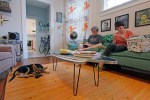
I really like that I feel close to the others that occupy the space with me. For example, if I am in the bedroom working, I can hear my boyfriend cooking in the kitchen while a record plays on the turntable in the living room and our pup is snoring in the hallway. It feels intimate and quaint. We entertain friends, raise a dog, host family meals and out-of-town guests, and complete countless large art projects all in this space so nothing about its size limits the way we live day to day.

I also like that living in a small space makes you reevaluate what is important to have and encourages you to simplify your possessions. In our case, we don’t have a television among other things. Coupled with our proximity to downtown, this allows us to get out more.

Tips for fellow and potential small-space dwellers:

Try to not to look at space limitations as a challenge, but as an opportunity. Be creative. Purge the things you can live without.

Living comfortably in a small space is all about editing out what you don’t need – both in your physical environment and your general lifestyle.

More about me:

I work as a full time graphic designer and marketing specialist for a company in Durham. I am also a freelance graphic designer and a volunteer with the Raleigh City Farm.

I have an unwavering sense of nostalgia. My love of all things vintage significantly influences where I choose to live and how I create a living space. I also lived in Spain for three years and my time there helped me better understand that living in a small space is fulfilling, practical, affordable, and green!

I restore vintage furniture and clothing as a hobby. I am a firm believer in purchasing second-hand as often as possible. In my first apartment, I made it my goal to not buy a single piece of furniture new, and I have never looked back. The goal has grown to include decorations, books, music, cookware, appliances and even the apartment itself.

Kinetic Spaces

An effective way to make the most of a small space is to have furniture that can easily collapse to store away, or transform to serve another function. A simple example is a futon: bed to couch.

Others are much more complex, specifically designed for the space and its inhabitants. These “kinetic spaces” feature integrated furniture that can move and change, and suddenly your bedroom has turned into your living room. These are fascinating! Commonly, kinetic spaces emerge out of necessity, so it’s no surprise they can be easily found in densely-populated, Asian and European cities.

What better way to fully understand these adaptable spaces than to see videos? Here are two of the most elaborate kinetic spaces I have found:

344 sqft apartment in Hong Kong 

“The house transforms and I’m always here, I don’t move. The house moves for me.” – Gary Chang (architect and inhabitant)

258 sqft apartment in Barcelona

“You come in and you don’t realize what’s actually all hidden in the wall. It’s full of surprise.” – Christian Schallert

Know of other successful examples of kinetic spaces? Please share!

CNN Small Space Questionnaire

Small spaces have hit mainstream news with San Francisco’s legal push for smaller living units, and NYC mayor Bloomberg’s call for micro-unit apartment designs. Although the hype is focusing on the “excessively small” (as I consider it), the conversation has introduced many to a new perspective of living.

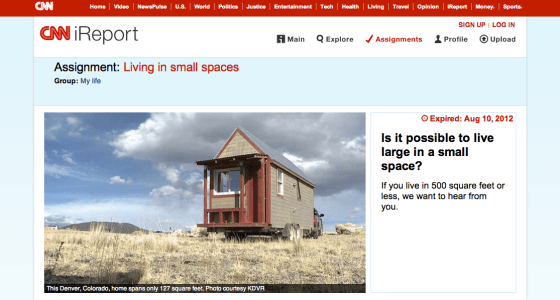
After CNN’s recent coverage on the subject, they had an open call for small space dwellers to submit pictures and share their experiences. If you are interested, you can still submit by the end of the week. As a follow-up to my submission, they sent a list of questions. So I thought I’d share my responses here. Enjoy!

CNN Small Space Questionnaire:

1. Why did you decide to live in a small space? How long have you been there, and were you living in a small space prior to moving here?

I came to this apartment already passionate about small spaces. In architecture school, I designed a small backyard apartment. That project really invigorated my interest in small, intentional, well-proportioned, and efficient spaces. My studio apartment epitomizes these characteristics. It has huge, operable windows that bathe the space with light all day long, making the space feel bigger. And it’s located in one of downtown Raleigh’s most walkable neighborhoods with everything from grocery stores to yoga studios to my office less than a mile away. I’ve lived here for a little over a year, and I can’t help but tell everyone about my lovely studio apartment. It’s amazing how much of a positive impact it has had on my life.

2. What was your initial reaction to moving into such a small space? Are you able to entertain– If so, how do your guests react?

Although my 300-sqft studio is small, it was the first place I lived on my own, without a roommate, after graduating college. I was thrilled to move in, and really make it my own. I kept some old furniture, and acquired new pieces to fit the space perfectly.

One of the wonderful things about living in a small space, is it encourages you to get out and meet people in public spaces. And with tons of restaurants and bars within walking distance, I do just that! But I do occasionally have people over for a drink to start the night. People are really excited to see my apartment. It’s rather unique and urban for Raleigh. Since I love it so much, I constantly post pictures on social media outlets and have a website, so people love to hear about my studio. Now if they see an article about a small space, I’m the first person that comes to mind. It’s great!

3. What about living in small space do you appreciate the most?

Everything is intentional, and everything has its place. The built-in at the entry has hooks for coats and bags, a double-sided bookshelf, and an integrated pantry. Just outside the bathroom is a collection of shelves and cabinets and a closet, perfect to store shoes, clothes, accessories, and linens.

Living in a small space has really influenced my lifestyle. I am more selective when purchasing anything for my apartment, because it can easily become over cluttered. I am more conscious about my waste, recycling as much as possible, and I even started vermicomposting my food waste. And I walk more often! My small studio influences me daily.

4. Do you ever find yourself frustrated with living in small space? If so, provide some examples.

The only amenity that would improve my apartment would be a dedicated outside space like a balcony or roof terrace, to be able to relax outside or grow more of a variety of plants. But fortunately, I can walk 5 minutes to my favorite park in Raleigh, and commonly picnic there. So that park has become my backyard. And my window sill has become home to a collection of potted plants helping liven up my space.

5. How do you make the most of your small space? Any tips/tricks for fellow iReporters who either live in or want to live in a small space?

Living comfortably in a small space is all about editing out what you don’t need. I have minimal pieces of furniture, and bountiful built-ins for storage. Keeping a small space open and clutter-free really helps expand the space.

6. Anything else you’d like to add?

I have never been so excited about a place where I’ve lived. Living in this studio apartment has truly had a profound impact on my way of living and interest in space. As an architect, this studio has also influenced how I design for others. I can’t wait to design my own small space!

La Simplicidad | Simplicity

“La simplicidad es una de las virtudes más complejas.” -Mario Borredetti

“Simplicity is one of the most complex virtues.” -Mario Borredetti

My 306 sqft Studio Apartment

Facts:

  • size: 306 sqft
  • type: studio apartment
  • city: Raleigh
  • inhabitant(s): just me!
  • my info: website | twitter

Describe your place:

My studio apartment is one of 5 apartments located above a dentist office, on the edge of Cameron Park historic neighborhood. It’s in one of the most walkable parts of the city. I live within a mile of so many amenities: a commercial center with 2 grocery stores, a couple yoga studios, a great park, a few of bars and restaurants, and even my job.

Although it’s small (306 sqft), my studio feels really spacious and open, thanks to big windows, built-in storage, and minimal furnishings. It has hardwood floors, mini-appliances, and a basement with laundry facilities and plenty of extra storage space.

What do you love about your space?:

Every part of my apartment feels intentionally designed and appropriately scaled.

The large operable windows really make the space. There are three windows in the main space and one in the bathroom – more than enough light to keep my studio naturally lit during the day. The west sun glowing through my translucent curtains makes me smile when I return home in the afternoon, especially when there’s a breeze and Broughton High School’s bells are ringing.

Also, the amount of built-in storage is incredible. The hook/shelf/pantry combo at the entry, and the nook just outside the bathroom accommodates everything: books, keys, food, cleaning supplies, clothes, shoes, linens, and more.

How would you improve your space?:

The only amenity that would improve my apartment would be a dedicated outside space like a balcony or roof terrace, to be able to relax outside or tend to a garden. But fortunately, I can walk 5 minutes to my favorite park in Raleigh, and commonly picnic there. So that park has become my backyard. And my windowsill has become home to a collection of potted plants helping liven up my space.

What do you like best about small living?:

This way of living has really influenced my lifestyle. I am more selective when shopping for anything from clothes to furniture, only purchasing what I need and what will last a long time. I am more conscious about my waste, recycling as much as possible, and I even started vermicomposting my food waste. And I walk more often!

Loving where you live really makes a profound impact on your life. My small studio influences me daily.
Tips for fellow and potential small-space dwellers:

You can make a small space feel spacious. Decorating can become overwhelming quickly, so keep furniture selections as petite and simple as possible. Having a few, key, and appropriately scaled items is the way to go. If your space is scaled down, so should your furnishings and decorations.
Living comfortably in a small space is all about editing out what you don’t need – both in your physical environment and your general lifestyle.

Anything else you would like to share?:

I have never been so excited about a place where I’ve lived. Living in this studio apartment has truly influenced my way of living and perception of space. As an architect, I can’t wait to design my own small space!